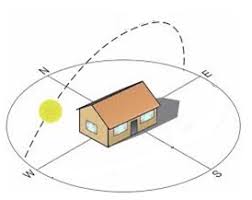
It sounds like a trick question: Should you expect sun in your sunroom? You might be surprised how often homeowners realize too late that the “sun” part of the project isn’t guaranteed by the windows alone. While the primary benefit of these spaces is to flood your home with direct light—providing natural warmth during the cold winters and a bright (but shaded) workspace in the summer—it all depends on the celestial path of the sun relative to your home.
Before you commit to a location for your new addition, you need to understand the sun’s path and how your house’s orientation will dictate the “mood” of your room. If you build in a spot that stays in the shade 300 days a year, you’ll still have a beautiful room, but it might not be the light-filled sanctuary you imagined.
Understanding the Sun’s Arc : The Latitude and Longitude of our DMV Area

The sun follows a predictable arc, but its height in the sky changes significantly between January and July. You need to think about which direction your proposed sunroom will face:
South-Facing (The Gold Standard): A south-facing sunroom is the powerhouse of the home. It receives the most consistent direct sunlight throughout the day. In the winter, the low-hanging sun reaches deep into the room, providing “passive solar heating”.
West-Facing: You will get intense, late-afternoon sun. This is great for sunset views, but you need to plan for significant heat gain and glare during the summer months.
East-Facing: Perfect for morning people. You’ll get bright, direct light for your morning coffee, but the room will move into indirect, cooler light by the afternoon.
North-Facing: This is the “artist’s light.” You will get very little—if any—direct sunlight. The light will be soft and even all day, which is great for a studio, but the room will feel much cooler and won’t benefit from solar heating in the winter.
Don’t Overlook The Trees Including Their Shape And Type
You should also look at your “landscape architecture.” – see if you have deciduous or evergreen trees around the proposed sunroom site.
Deciduous trees (trees that lose their leaves in the fall) are a sunroom’s friend. Have the windows lined with deciduous trees and you will have a nicely shaded room in summer from the full canopy which lets in filtered light but prevents the room from overheating. In the winter, once the leaves fall, the bare branches allow the direct rays of the sun to pass through and warm the space. It’s a low-tech, high-efficiency way to manage the room’s climate.
But if you have Evergreen trees (trees that stay green all year long) e.g. pine or cedar, they can be helpful in summer by blocking all that directly light, but they will continue to block that direct light in winter, thus robbing the sunroom of the much needed winter sun.
Be a “Sun Detective” for a day
Before you pull the trigger on a design, you need to investigate the proposed site yourself. A good old scout tricks work here and is kinda fun.
- Pick a day (works for any time of the year): Just needs to be a clear day with lots of sun
Mark the Spot: Go to the area where you think the sunroom should go. A deck, part of yard, side of house etc.
Log Every Two Hours: Starting at 8:00 AM, check the spot every two hours until sunset. Take a photo or just log what portion of the proposed site is drenched in sun vs in shadow.
Note the Shadows: Is the neighbor’s house blocking the light at 2:00 PM? Does your own roofline cast a shadow over the area by mid-afternoon?
Consider the Season: Remember that in the winter, the sun will be much lower. If you’re doing this in July and a nearby building is “just barely” out of the way, it will likely block your sun entirely in December.
- And if empirical evidence is not enough, you can also do some online sleuthing. I like this site – https://www.suncalc.org/ – just enter your address and see if it aligns with your own sun study findings.
Proceeding With Eyes Wide Open
Once you have the data from your “sun study”, you should see exactly how many hours of the day will the sun shine in your sunroom. If you are perfectly happy with a shaded, cooler room for reading or a quiet office, a North-facing or shaded spot is fine. But if your goal is to “soak up the rays,” you must align your expectations with the physical reality of your lot. Taking a day to track the light now ensures you are going to make a well-informed decision. And not all is lost just because your house happens to not be oriented in the right direction. You may still decide to move ahead, and there are plenty of other mitigating strategies (ceiling fan, split unit, curtains) to still enjoy the sunroom, but at least there will be no surprises after you make the investment to build it.
We hope we have given you enough to think about, but if you would like to talk to us, we would love to hear from you.
