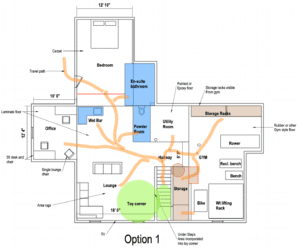
In modern home design, few trends have been as dominant or as enduring as the “open floor plan.” By removing the walls between the kitchen, dining, and living areas, homeowners create a singular, expansive “Great Room” that serves as the heart of the home. This style of plan, made popular by noted architect Frank Lloyd Wright owes its creation to his client, Nancy Willey, who wanted to push the boundary beyond the norms.
While this layout is undeniably trendy and a proven way to increase resale value in the DMV market, it isn’t without its trade-offs. As designers, we are big fans of the open-concept look for the light and flow it provides, but we always encourage our clients to weigh the practicalities before swinging the sledgehammer.
The Pros: Why We Love Open Concept
There is a reason nearly every major renovation in most cities across the world, starts with the phrase “we want to open it up.”
- Social Connectivity: Whether you are helping kids with homework while cooking dinner or hosting a party, the open plan keeps the household connected. You are no longer “trapped” in the kitchen.
- Maximizing Natural Light: Interior walls block windows. By removing them, light from the front of the house can reach the back, making the entire floor feel brighter and more vibrant. Similar issues exist when we convert a deck into a sunroom, blocking light to the room behind the sunroom.
- Perceived Space: Even if you don’t add a single square foot to your home, an open plan makes a small footprint feel significantly larger. It eliminates “dead” space like hallways and cramped formal dining rooms. We recently wrote a post on how the human brain perceives architecture.
- Market Appeal: Open floor plans remain a top priority for homebuyers. Investing in this conversion is one of the most reliable ways to ensure your home remains competitive in the local real estate market.
The Cons: What to Consider Before You Commit
Living in one giant room comes with a set of unique challenges that “closed” floor plans solve naturally.
- Acoustics and Noise: Without walls to stop sound, everything is amplified. The noise from the dishwasher, the TV in the living area, and a conversation at the kitchen island all compete. This can be particularly challenging for those working from home. Definitely read how the human brain perceives architecture, where we talk about this very topic of acoustics and noise.
- The “Mess” Visibility: In a traditional layout, you can leave the dinner dishes in the sink and retire to a clean living room. In an open plan, the kitchen is always on display. If you prefer a “clutter-free” look, you’ll need to be diligent about kitchen organization.
- Smell Travel: When you sear a steak or fry fish, the aroma will permeate the entire Great Room. High-end ventilation (a powerful range hood) is a non-negotiable requirement for an open-concept kitchen.
- Heating and Cooling: Larger volumes of air are harder to condition. In older homes, you may find that your existing HVAC system struggles to keep a large, open space at a consistent temperature, unless you also plan to upgrade the HVAC system.
The Structural Reality
From a design standpoint, we love the “airy” and “inviting” feel that open plans provide. However, it is important to remember that those walls you want to remove are sometimes load-bearing. In many DMV homes, removing that load bearing wall will require the installation of a recessed steel or LVL beam to carry the weight of the floor above. This is where a Structural Engineer becomes a vital part of the design team and is an additional cost, most homeowners forget.
Is an open floor plan right for your lifestyle? While it requires careful structural planning and a strategy for managing acoustics, the result is often a home that feels more modern, social, and spacious. Professional design helps you find the perfect balance between “open and airy” and “functional and private.”
