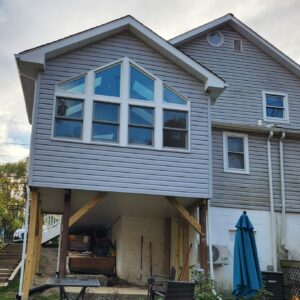
In our DMV climate, a deck works serves well for the best months of the year, but rest of the time it is a space surrendered to the humidity of July or the chill of November. Converting an existing deck into a screened porch or sunroom is a beautiful way to reclaim your home’s relationship with the outdoors, but it requires a careful study of both structure and spirit.
1. Think about Sun and Light
When we transition a deck into a roofed structure, we are fundamentally changing the path of light into your home. A deck is non-shade producing, but a roofed porch introduces shade. We must evaluate how this new “volume” affects the natural light in your adjacent living spaces, which is a must, when adding a roofed structure. Will a vaulted ceiling with skylights preserve that morning glow? We design to ensure that while you gain a new room, you don’t lose the utility of existing rooms.
2. Thermal Comfort and the “Indoor-Outdoor” Balance
The feasibility of your conversion depends on your desired level of use of this new room. In our previous discussion on Sunroom Categories, we noted the spectrum of isolation:
The Screened Porch (Category I): Focuses on the “path of air,” providing a shaded, insect-free breeze while remaining part of the exterior.
The Three-Season Room (Category II/III): Introduces a glass envelope to extend your comfort into the shoulder seasons of spring and fall.
The Conditioned Addition (Category IV/V): Requires insulated walls, ceiling and floors all around. Since an old deck is open to the air below, the new conditioned space needs to meet building code and energy efficiency code. If you have the flexibility, you could easily up-level this project to be a room addition.
3. Evaluating the Structural Foundation
Beyond aesthetics, we must ensure the “bones” are adequate for the new “dead loads” (the weight of the roof and glass) and “wind loads” (lateral pressure on the new walls). Most decks sit on isolated footings designed for “live loads” of people, not the permanent weight of an enclosed room. Converting a deck to a sunroom typically requires new footings as well, to ensure the new structure won’t settle or pull away from the main house.
4. The “Fresh Start” Philosophy
While it is tempting to build atop what is already there, the most successful designs often come from a clean slate. When we weigh the costs of reinforcing old piers, “sistering” joists for stiffness, and repairing old ledger flashing, we often find that the project is better served by starting afresh. Most people find that a new, specifically engineered foundation is often more cost-effective than trying to force an old deck to support a new room.
The Bottom Line
Your deck is the first chapter of a much larger story. You can turn that underutilized platform into a seamless, high-comfort extension of your home’s envelope. And don’t let the technical details slow you down, we can help guide you along. And since we love to educate – read all about deck related projects, how to plan, what options do you have etc.
